- You are here:
- Homepage
- Resource library search
- Fact sheet: Selective Licensing (Wales)
Related resources
Authorities must shift to transparent and evidence-led licensing
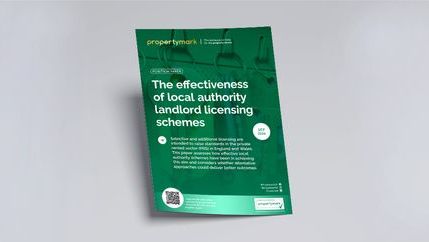
Propertymark’s latest position paper examines whether local authority landlord licensing schemes are achieving their stated aim of improving standards in the private rented sector. Selective and additional licensing schemes are expanding across England and Wales, placing significant costs and administrative demands on landlords and letting agents, particularly where requirements vary between council areas or repeat existing legal duties.
The effectiveness of local authority landlord licensing schemes
Landlord licensing schemes are expanding across England and Wales, bringing increased cost and administration for landlords and letting agents. While intended to raise standards in the private rented sector, inconsistent enforcement and stretched local authority resources raise questions about their effectiveness.
Registration and licensing failures drive 96% of penalties
Landlords who failed to register or obtain the correct licence accounted for almost all of the 3,198 fixed penalty notices (FPNs) issued by Rent Smart Wales in the 12 months to May 2026, highlighting the valuable role agents can play in supporting client compliance. All private landlords renting out domestic property in Wales must register with Rent Smart Wales and either employ a licensed agent or become licensed to manage the property themselves.
Licensing expands as penalties increase under Renters’ Rights Act
The first phase of the Renters’ Rights Act 2025 has been in force since 1 May 2026, but local regulation is continuing to develop alongside it. Councils across England are consulting on new selective licensing schemes and planning controls for Houses in Multiple Occupation (HMOs), creating further checks, costs, and responsibilities for agents and landlords.