
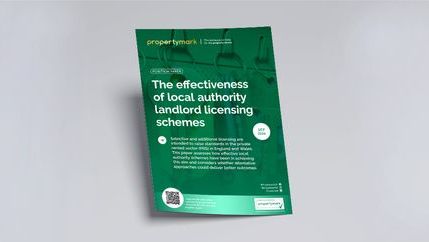
We support action to tackle poor-quality and unsafe housing. However, discretionary licensing is a blunt tool when it requires responsible landlords and agents to pay and complete extensive applications, while those operating outside the law can remain hard to identify.
Focus on the highest-risk homes
Councils already have a range of powers to deal with unsafe and poorly managed homes. These include the Housing Health and Safety Rating System, improvement notices, prohibition orders, civil penalties, banning orders, and Rent Repayment Orders.
Duplicating these existing powers by adding a licensing scheme absorbs resources in processing applications and checking paperwork, reducing a council’s ability to carry out property inspections and enforce standards.
Furthermore, many councils struggle to recruit and retain environmental health professionals, leaving enforcement teams under-resourced and risking schemes becoming reactive and complaint-led, rather than proactively identifying poor housing.
High fees need clear justification
Landlord licensing fees can now exceed £1,000 per property in some areas. For letting agents managing local portfolios, these costs can quickly reach tens of thousands of pounds.
Councils are not permitted to use licensing schemes to generate a profit. Yet landlords and agents are often given limited information about the full cost of running a scheme or how much licence income will fund inspections and enforcement.
We are calling for clearer reporting. Councils should publish the total projected cost of a scheme over its full five-year term, with a breakdown of staffing, IT, and legal costs. They should also publish annual data on inspections, enforcement action, officer capacity, and the collection of civil penalties.
This would help landlords, agents and the public assess whether a scheme is delivering meaningful improvements in housing standards.

National reform must reduce duplication
The forthcoming rental property register in England should provide a single national record of landlords, properties, and key compliance documents that helps responsible businesses demonstrate compliance and allows councils to focus on higher-risk cases.
However, local schemes must not require landlords and agents to repeatedly submit the same information or pay to operate parallel systems.
The UK Government must require councils to use the national database as their primary source of information. Local fees should then reflect the actual cost of property inspections and enforcement, rather than duplicating data entry and document storage.
We also recommend a lead authority model for agents working across several council areas so that core checks, such as fit and proper person assessments, could be accepted across local authority boundaries rather than repeated.

A proportionate alternative
We have consistently challenged poorly justified licensing proposals since the legislation was introduced by the Housing Act 2004. Our responses to local consultations have called for schemes to be backed by robust local evidence, have clear and measurable outcomes, and avoid unnecessary burdens on compliant landlords and agents.
Engagement, support, and targeted enforcement are more likely to raise standards than blanket licensing. Councils should use data and intelligence to focus their resources on known non-compliant landlords, while supporting responsible providers to understand and meet their obligations.

Other recommendations for improvement
Our position paper also calls for:
- exempting professionally managed Build to Rent developments from discretionary selective licensing;
- recognising landlords who use Propertymark protected agents through fee reductions;
- limiting the administrative element of licence fees;
- independently auditing schemes before they are renewed; and
- introducing a limit on consecutive scheme renewals, so temporary interventions do not become permanent costs without evidence of success.
Licensing must be fair, clear and focused on better standards. We will continue to engage with councils and governments to make sure regulation is proportionate, transparent, and delivers real benefits for tenants, landlords and agents.

Landlord Licensing
We do not believe that selective licensing schemes are an effective way of promoting higher quality accommodation. Find out why we believe this and why a collaborative approach is needed.