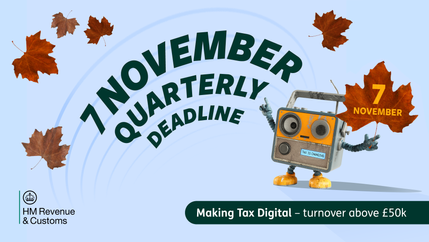
MTD became mandatory on 6 April 2026 for sole traders and landlords whose qualifying income from self-employment and property was more than £50,000 in the 2024–25 tax year. More than 570,000 people have now joined the service, according to figures published by HMRC.
Those who are in scope but have not signed up or sent their first update should act now. Although HMRC will not issue penalty points for late quarterly updates during 2026–27, taxpayers must still keep digital records and submit the required information.
Making Tax Digital
Making Tax Digital for Income Tax is a new way for sole traders and landlords to report their income and expenses to HMRC. Letting agents can undertake this process on behalf of the landlords and help their clients understand the changes.
HMRC sign-up has begun
From September 2026, HMRC will start signing up people who it believes should already be using Making Tax Digital for Income Tax. This will happen in stages over several months, using information from 2024–25 Self Assessment tax returns. HMRC will contact each person after registering them, either through its online services or by post, depending on their circumstances.
Landlords and sole trader agents do not have to wait to be contacted. They can still sign themselves up or ask a tax professional to do it for them. Registering directly allows them to check that HMRC has the correct details and include any changes since their last tax return.
Anyone who is unsure whether they have been registered can check through HMRC online services. A message will appear after they sign in if HMRC has already added them to the service.
What Making Tax Digital means in practice
People who fall within the rules must use compatible software to:
- create and store digital records of their self-employment and property income and expenses
- send HMRC a summary of that income and expenditure every three months
- submit their tax return and include any other sources of income, unless HMRC has already added them.
Quarterly updates are summaries rather than tax returns. They do not replace the annual Self Assessment process, and the deadline for submitting a tax return and paying the full tax bill remains 31 January following the end of the tax year.
For most taxpayers, the first update covered 6 April to 5 July 2026. Those using calendar quarters reported for 1 April to 30 June. The deadline for both groups was 7 August 2026. No penalty points will be issued for late quarterly updates in the 2026–27 tax year, so anyone who missed the first deadline can still catch up. Penalties for late tax returns and late payments continue to apply.
From 6 April 2027, the points-based system will apply to missed quarterly deadlines. One point will be given for each missed deadline. Once a taxpayer reaches four points, they will receive a £200 fixed penalty. Points expire after a period of compliance.
What to do after HMRC signs you up
Anyone who receives confirmation that HMRC has registered them should:
- Sign in to HMRC online services using their Self Assessment details and select Making Tax Digital for Income Tax.
- Check the self-employment and property income records taken from their 2024–25 tax return. This includes UK and overseas property income.
- Add any new income sources and tell HMRC about any that have stopped.
- Choose compatible software that covers all their income sources and works with their accounting period.
- Create digital records from the start of the tax year and send any overdue quarterly updates as soon as possible.
All UK properties are treated as one UK property business for these purposes. Overseas properties are treated together as one foreign property business.
If all self-employment and property income sources ended by 5 April 2026, the taxpayer will not need to use the service for 2026–27. If they ended after 6 April 2026, the taxpayer must submit a final quarterly update covering the period up to the date the income source ended, as well as their 2026–27 tax return.
Anyone HMRC has registered who believes they are not required to use the service should contact Self Assessment general enquiries.

More agents and landlords will enter the system in 2027
The qualifying income threshold will fall in the next tax year. From 6 April 2027, Making Tax Digital for Income Tax will apply to sole traders and landlords with qualifying income of more than £30,000.
Those who will come within the rules from April 2027 can sign up in advance and can now apply for an exemption if they believe they qualify.
Exemptions are available in some circumstances
Some people may be exempt from Making Tax Digital for Income Tax, including those who are digitally excluded. This means it would not be reasonable for them to use compatible software to keep records, send quarterly updates, or submit their tax return.
People who are not automatically exempt must apply to HMRC. Applications can be made for a temporary exemption lasting until at least April 2027 or for a digitally excluded exemption, which may be permanent depending on the person’s circumstances.
If an application is refused, the decision letter will explain why and how to appeal. An appeal can be made within 30 days of the date of the letter. Even where an exemption is granted, the taxpayer must continue to report their income and gains through Self Assessment as usual.