
The Housing, Communities and Local Government Committee wrote to Housing Minister Matthew Pennycook MP in July 2026 after receiving representations from parliamentarians about cases involving both freehold and leasehold homeowners.
The Committee highlighted homeowners receiving demands for substantial payments for retrospective consent for alterations such as extensions, fencing and sheds, as well as work carried out many years previously or by former owners.
With reports emerging from different areas of England, the then Committee Chair Florence Eshalomi MP questioned whether the cases could indicate a wider national problem rather than isolated disputes.
Potential wider problem acknowledged
Responding to the Committee on 21 August, Pennycook recognised concerns about unexpected and potentially disproportionate demands being made of homeowners.
While restrictive and leasehold covenants can serve legitimate purposes – including protecting shared infrastructure and managing rights and responsibilities between property owners – the Minister stated that exploitative behaviour towards homeowners is unacceptable.
Significantly, the MHCLG acknowledged that reports of high demand for historic alterations indicate the issue may extend beyond isolated local disputes. However, stated further evidence is required before conclusions can be drawn about its national prevalence.
The Minister also recognised that existing routes for homeowners to challenge covenants can be complex, costly and difficult to navigate. MHCLG will consider whether further safeguards are required, including greater transparency when rights attached to land are bought and sold and improved routes for homeowners to challenge unreasonable demands.
Right of First Refusal remains under consideration
The Committee also asked whether homeowners should have a statutory Right of First Refusal when a developer or freeholder sells an interest in their property which carries enforcement rights.
Pennycook acknowledged there is a strong case for homeowners to have greater visibility or control when such interests are transferred, particularly where the rights involved could materially affect how they occupy or use their homes.
The UK Government will keep proposals for a Right of First Refusal under consideration; however, the Minister stressed that any new right would need to account for the complexities of different estates, titles and tenures.
Further protection could be added to reforms
The forthcoming Commonhold and Leasehold Reform Bill is expected to address some of these concerns.
Existing proposals include changes to estate rentcharge enforcement for freehold estates and replacing leasehold forfeiture with a more proportionate enforcement system.
However, the UK Government has now confirmed it will consider whether additional measures are necessary to protect homeowners specifically from the unreasonable enforcement of restrictive covenants as it develops the final Bill.
Propertymark evidence has highlighted the impact
Propertymark has campaigned for meaningful reform of the leasehold system for almost a decade. Our research repeatedly demonstrates how restrictive terms, escalating costs and uncertainty can affect both homeowners and the property market.
Our earlier research into leasehold found that almost a third (29%) of agents believed all properties with restrictive covenants could experience difficulties when being sold, whilst a further 60% said the impact depended on the individual property. The research also recognised that legitimate covenants could have a useful role, for example by protecting neighbours and maintaining appropriate standards within a development.
Our campaigning has continued as the UK Government develops its latest reforms. In February 2026, we submitted evidence to the Housing, Communities and Local Government Committee's scrutiny of the Draft Commonhold and Leasehold Reform Bill, based on feedback from Propertymark members. We have called for reforms that address costs and consumer protection while ensuring changes are workable for agents, homeowners, lenders and managing agents.
This builds on our wider calls for action on ground rents, service charges, building safety, clearer consumer information and the statutory regulation of property agents. Our latest leasehold research has reinforced the urgency of reform, demonstrating that uncertainty and costs continue to affect transactions and confidence in this part of the market.
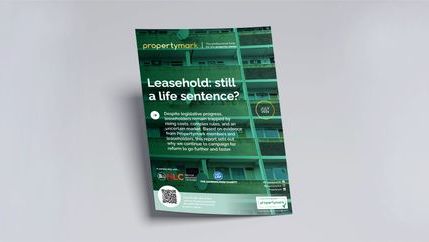
Leasehold: still a life sentence?
Despite legislative progress, leaseholders remain trapped by rising costs, complex rules, and an uncertain market. Based on evidence from Propertymark members and leaseholders, this report sets out why we continue to campaign for reform to go further and faster.
Reform must deliver transparency and certainty
We welcome the recognition that homeowners need clear information about restrictions affecting their property and proportionate ways to challenge unreasonable demands.
Restrictive covenants can serve a legitimate purpose, but consumers must understand the obligations they take on when they purchase a property, who can enforce them and the potential costs involved. This is particularly important where enforcement rights can subsequently be sold or transferred to another party.
As the Commonhold and Leasehold Reform Bill progresses, we will continue to engage with the UK Government and parliamentarians to ensure reforms provide greater transparency and protection for consumers while remaining practical for property professionals and the wider housing market.