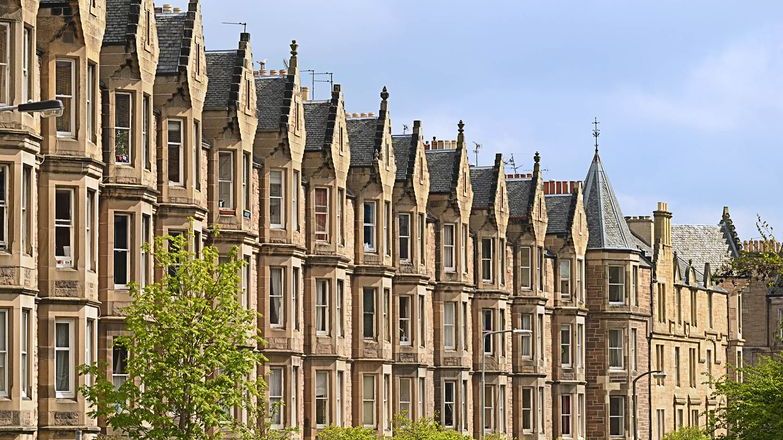
Under the Scottish Government's proposals, two additional council tax bands would be introduced from 2028 for the highest-value homes. Band I would apply to properties valued between £1 million and £2 million; Band J would cover those valued above £2 million.
Unlike the existing council tax system, which remains based on 1991 property values, homes falling within the new bands would be assessed using up-to-date valuations.
Propertymark members are concerned the proposals represent another property tax reform being considered in isolation, rather than as part of a wider review of how taxation affects Scotland's housing market.
Taxation must support movement in the housing market
We have consistently highlighted that high levels of property taxation can act as a barrier to people moving home. Reducing these costs can stimulate transactions and wider economic activity as buyers and sellers spend money on removals, storage, home improvements and professional services.
There is broad political agreement that a council tax system still based on 1991 onward property values requires fundamental reform. The Scottish Government has itself pledged reform over many years, but adding two bands at the top does not address the underlying problems with the existing system.
The Scottish Government estimates that around 15,000 properties out of approximately 2.7 million residential properties would be affected by the additional bands, raising between £12 million and £16 million.
This compares with around £3.5 billion raised through council tax for local government. With £5 million already set aside to administer the changes, alongside the potential cost of appeals and deferred payments, Propertymark is concerned the proposals could introduce significant complexity for comparatively little extra revenue.
Instead, we want to see measures that encourage movement within the housing market, including reductions to Land and Buildings Transaction Tax (LBTT) and the Additional Dwelling Supplement (ADS). Lower transaction costs would help people move into homes that better meet their needs, support affordability and generate wider economic activity.
Valuing higher-value homes presents challenges
Identifying and accurately valuing properties worth more than £1 million is a practical concern.
Homes at the upper end of the market can be particularly difficult to value because properties tend to be more individual, transactions are less frequent and automated valuation methods may be less reliable.
Unique properties, particularly those that have not changed hands for decades, could prove especially challenging. Without recent comparable transactions or on-site assessments, valuations could effectively become estimates.
The proposed thresholds could also create cliff edges between bands. Where a property's valuation sits close to a threshold, homeowners will have a clear incentive to challenge the assessment, potentially increasing appeals and creating administrative backlogs.
Band thresholds are also a risk that could influence asking prices or discourage homeowners from making improvements that could push their property into a higher council tax band.
Propertymark believes enough appropriately skilled assessors must be available to ensure accurate valuations and homeowners are confident in the new system.
Asset-rich homeowners could be disproportionately affected
The proposals could create difficulties for people who have owned their homes for many years and have seen property values rise significantly without experiencing a corresponding increase in their income.
Older homeowners may therefore find themselves asset rich but cash poor and facing substantially higher council tax bills simply because of the value their property has reached.
For some, moving to a smaller or more suitable property may not be an easy solution because LBTT creates an additional cost when buying their next home.
This combination could encourage more homeowners to defer council tax payments rather than move, potentially restricting the supply of larger homes coming onto the market and reducing the revenue the Scottish Government expects to generate.
Local impact must also be considered
The effect could be that the new bands may not be evenly distributed across Scotland, with Edinburgh and some rural areas likely to contain a greater concentration of higher-value properties.
Additional bands revenue would support local government; however, greater clarity is needed on whether money raised will remain with the local authority where the property is located or be distributed across Scotland according to an agreed formula.
Propertymark believes there should be a clear synergy between council tax paid by residents and the funding of services in their local area.
The Council Tax (Scotland) Bill will introduce two extra bands for the mansion tax, a measure that will target a small minority of properties and risk the market with disputes over valuations and administration.
For all the words about strengthening the economy, there was no mention of reducing costs and taxes for renters and home buyers and sellers.
History shows that when property taxation is lowered or removed, transactions increase in the sales market, while a reduced tax burden for landlords means fewer costs being passed on to tenants via higher rents.
Rather than reform individual property taxes in isolation, the Scottish Government must look at taxation across the housing market. Cutting LBTT and the Additional Dwelling Supplement would help remove barriers to moving, support affordability and generate wider economic activity.