We have consistently called for councils across the UK to have a dedicated empty homes officer, a dedicated strategy for tackling empty properties, and to ensure sufficient revenue and capital budgets are in place to tackle the problem. A strategic approach is vital if EDMOs and other existing powers are to be used effectively.
What is changing?
The Housing (Empty Dwelling Management Orders) (Prescribed Period of Time and Prescribed Requirements) (England) (Amendment) Order 2026 restores the original six-month vacancy threshold from the Housing Act 2004, reversing the increase to two years introduced in 2012.
It also removes requirements for councils to prove that the property is causing a nuisance to the community and that the community supports the proposed interim EDMO.
The changes apply in England only, to applications submitted on or after 5 November 2026. Applications submitted before that date remain subject to the previous rules.
One step on the Propertymark roadmap
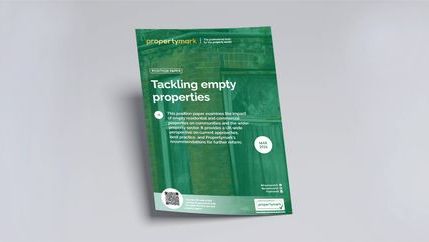
Our position paper, Tackling empty properties, examines the scale, causes, and consequences of empty residential and commercial properties and sets out our recommendations for a more strategic, well-resourced approach.
Across the UK, more than 359,000 residential properties have been empty for over six months, representing a significant untapped housing resource. While a range of tools – including EDMOs – are available, their application is inconsistent and often limited by resource constraints, with many local authorities lacking dedicated strategies, officers, or funding.
Fewer than half of local authorities have an empty homes strategy in place, and only a quarter have a dedicated budget for this work.
How do EDMOs work?
An EDMO transfers management powers to a local authority without transferring ownership. The council can take steps to bring the property into occupation but cannot sell it.
The process begins with an interim EDMO, which requires authorisation from the First-tier Tribunal (Property Chamber). Before making an interim order, the council must make reasonable efforts to notify the owner and establish what they are doing, or intend to do, to get the property occupied.
During the interim stage, the council needs the owner’s consent to let the home. If agreement cannot be reached, a final EDMO can allow the council to take over possession and management without that consent. Management under a final order can last for up to seven years.
Reaching six months of vacancy does not automatically trigger an order. Tribunal scrutiny remains, as does the requirement for councils to notify the owner in writing at least three months before applying, or to have made all reasonable efforts to do so.
Read the explanatory memorandum
Which properties are excepted?
The existing exceptions remain unchanged. These include homes genuinely on the market for sale or letting, holiday homes, and certain properties left empty because the owner is temporarily living elsewhere, receiving or providing personal care, or serving in the armed forces.
There are also exceptions for some employment-related homes, properties affected by criminal proceedings, and other specified circumstances.
Where an owner has died, the property remains excepted until six months after the grant of representation, such as probate. This protection applies even where the home was already empty for more than six months before the grant. Agents handling inherited properties should therefore make sure they are clear on the date the property became vacant and the date probate was granted.

What should agents consider?
Agents should review empty properties with their clients, record why each home is vacant, and keep evidence of genuine marketing and plans to bring it back into use. Responding promptly to council enquiries will help explain the owner’s circumstances and the steps being taken.
Letting agents should also be aware of the interaction with the Renters’ Rights Act 2025. The explanatory memorandum acknowledges that a property could become eligible for an EDMO during the 12-month restriction on re-letting following service of a possession notice relying on Ground 1 or Ground 1A.
A home genuinely marketed for sale may fall within an existing exception, but the circumstances must be considered individually. The tribunal must also assess whether there is a reasonable prospect of occupation if an order is made. Owners seeking possession from tenants at the end of an EDMO will need to use an applicable Section 8 ground.