
The Building Safety Regulator (BSR) has announced a reset of the building assessment certificate process. At the same time, the UK Government has opened a consultation on changing the emergency repairs route.
Although the measures apply to different parts of the regulatory system, they share a common objective: ensuring that resources and scrutiny are directed according to risk while maintaining the safety standards introduced following the Grenfell Tower fire.
Why this matters to property agents
Members who manage higher-risk residential buildings may have duties as an accountable person (AP) or principal accountable person (PAP), depending on the ownership and repairing responsibilities attached to the building.
Even where the agent is not legally an AP or PAP, they are likely to support the responsible parties by managing works, maintaining records, communicating with residents, and supplying information for the building’s safety case.
Letting and sales agents dealing with individual properties in higher-risk buildings may also need to work with managing agents and accountable persons to obtain accurate information about fire safety, structural risks and remediation work.
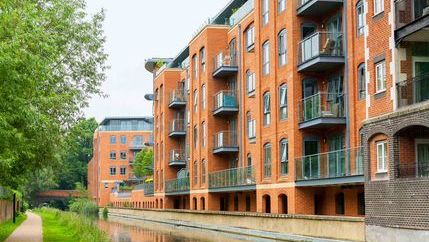
BSR will reset building assessment certificates
Building assessment certificates are part of the regime for occupied higher-risk residential buildings. When directed by BSR, the PAP must apply for a certificate and provide evidence demonstrating how fire-spread and structural-safety risks are being managed.
Since the assessment process began in April 2024, almost 2,000 buildings have been called forward. However, BSR says assessments are taking twice as long as originally expected, and 66% of applications made so far in 2026 have been refused.
Applications have frequently concentrated on showing that procedures exist without providing sufficient evidence that safety risks are being managed effectively. Smaller resident management companies, Right to Manage organisations and other volunteer-led bodies have found the requirements particularly difficult to navigate, sometimes resulting in substantial costs being passed to residents.
BSR will now develop a more targeted, intelligence-led and risk-based approach. During the transition, it will prioritise applications already under assessment and call in new applications only where necessary.
The new approach is expected to include:
- an initial focus on organisations responsible for multiple higher-risk buildings
- sample interventions triggered by risk or intelligence about a building, organisation or duty holder
- more preparation time for smaller, volunteer-run resident management bodies
- support for applicants whose assessments are underway or have previously been refused
- possible fast-track reassessments where the reasons for a refusal have been addressed.
Simplified assessment criteria and clearer guidance on suitable fire and structural risk assessments are also planned. BSR expects its first updated resources to be available from September 2026.
This responds to issues Propertymark has raised since the higher-risk building regime was introduced. Our Building Safety Act guidance for agents called for clearer timelines, standardised documentation and a simplified explanation of AP and PAP responsibilities.

Legal duties have not been suspended
The reset does not remove or postpone the duties of APs and PAPs. They must continue to identify, prevent, and manage the risks of structural failure and the spread of fire, whether or not their building has been called forward for assessment.
PAPs must also maintain an effective mandatory occurrence reporting system, operate a resident engagement strategy and prepare and update the building’s safety case report. BSR has warned duty holders not to wait for a future assessment before assembling the necessary evidence.
Obtaining a building assessment certificate is not an alternative to managing safety continuously. The purpose of the certificate process is to check that effective arrangements are already operating.

Emergency work can still be held up by prior approval
The second development concerns building control approval for work to existing higher-risk buildings.
Most building work must receive BSR approval at Gateway 2 before it begins. An exception currently exists for “emergency repairs” where there is an urgent risk to the health, safety or welfare of people in or around the building and obtaining prior approval would not be practicable.
However, the current definition is narrow. It generally permits the repair of a broken or damaged building element, but not its replacement, improvement, or enhancement. Consequently, urgent work such as replacing a failed fire alarm, sprinkler system or fire door may still require a full Gateway 2 application, which normally has a minimum assessment period of eight weeks.
This can leave buildings dependent on disruptive and costly interim arrangements such as waking watches or, in serious cases, the temporary relocation of residents.
Propertymark has previously reported concerns about the effect of delays in the BSR approval process. We have consistently argued that robust regulation must be supported by clear guidance, sufficient expertise and practical processes that allow necessary work to move forward without compromising safety.
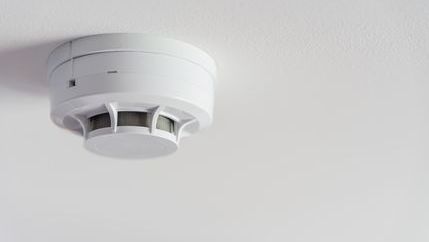
Two possible routes for urgent work
The consultation presents two main alternatives.
The first would widen the definition from emergency “repairs” to emergency “works”. This could allow an existing building element to be replaced or upgraded where urgent action is required. For example, a failed fire alarm could be replaced with a newer system performing the same essential function.
The second would create a separate critical works route. This could cover a wider range of urgent circumstances, including works needed because temporary safety measures are no longer sustainable, funding or access is available for a limited period, or delays would have a serious effect on vulnerable residents or an essential public service.
Under either approach, the work would still have to comply with the Building Regulations. BSR would retain retrospective oversight and enforcement powers; the proposals are intended to change when approval is obtained, rather than lower the standard that must be met.
The consultation closes on 3 September 2026. Until the government responds and any necessary secondary legislation is made, the existing emergency repairs definition continues to apply.
How the two changes work together
The announcements affect different stages of building safety management but can intersect in practice.
If urgent work qualifies for the emergency route, it may begin without prior BSR approval. The regulator must be notified as soon as reasonably practicable, and an application for a regularisation certificate must be submitted after completion. Relevant notices must also be shared with the building’s responsible person and PAP.
The PAP must then ensure that the work is reflected in the safety case report and the building’s wider “golden thread” of safety information. A mandatory occurrence report may also be necessary where the work addressed a serious risk involving structural failure or the spread of fire.
How the incident was identified, managed, recorded and communicated could therefore contribute to the evidence used to demonstrate effective risk management when the building is assessed for a building assessment certificate.
In simple terms, the consultation is about making it easier to carry out genuinely urgent work promptly; the BSR reset is about improving how the continuing management of the building is assessed. Together, they aim to deliver a more workable system without diluting legal responsibilities or safety standards.

Understanding leasehold block management
Get to grips with leasehold block management in this beginner-friendly course.