
Recent Zoopla data shows that the average house price has increased by 43% since 2016, while the average flat has risen by just 10% over the same period. Across the UK, the average flat now costs £193,000, compared with £327,000 for a house.
The gap is even wider when London is excluded. Outside the capital, the average house now costs 2.3 times as much as the average flat, up from 1.8 times in 2016. The West Midlands has the widest gap, with houses costing 2.5 times as much as flats.

Leasehold uncertainty is holding flats back
Flats remain an important route into home ownership, particularly for first-time buyers and for people purchasing in higher-value areas. However, leasehold uncertainty is one of the key reasons why flat values are underperforming compared with houses.
The contrast with Scotland is notable. Scotland does not have the same long leasehold system as England and Wales, and Zoopla reports that the ratio between house and flat prices has barely changed there over the last decade. Scottish flats also sell more quickly, taking around 15 days compared with the wider UK average of 40 days for flats.
This supports what Propertymark members have been reporting for several years. Buyers are more aware of leasehold issues than they were in the past, and that awareness is changing behaviour. Propertymark research found that 72% of responding agents believed homebuyers were more aware of leasehold issues than five years earlier, while 67% said buyers were negotiating harder on leasehold properties.
For agents, this means leasehold information is no longer a late-stage technical detail. It is now a core part of buyer decision-making and can affect price, speed of sale and the likelihood of a transaction completing.

Costs and complexity are influencing buyer decisions
Buying a leasehold flat can be more complex than buying a freehold house. Buyers need to understand lease length, service charges, ground rent, management arrangements, building safety issues and restrictions within the lease.
Zoopla’s analysis of leasehold listings found that the typical leaseholder pays £200 a year in ground rent and £1,900 a year in service charges—a combined £2,100 a year. While freehold owners also pay for insurance, repairs and maintenance, they generally control those costs directly. Leaseholders often rely on freeholders, managing agents or resident management structures for key decisions.
Propertymark’s own research has highlighted similar issues. Members have raised concerns about short leases, the cost of lease extensions, delays in getting information from management companies and the need for clearer processes for buying the freehold. These issues can make flats harder to sell, even when the property itself is suitable for a buyer’s needs.
Escalating ground rent remains a particular concern. Propertymark’s research found that 78% of agents said that a leasehold property with an escalating ground rent would struggle to sell even if priced correctly. The Leasehold Reform (Ground Rent) Act 2022 removed ground rents on most new long residential leases in England and Wales, but it did not resolve the position for many existing leaseholders.

Agents need clear information early
For estate agents, the widening price gap is a reminder of the importance of collecting and presenting accurate leasehold information as early as possible.
Material information about lease length, ground rent, service charges, reserve funds, major works, building safety and restrictions should be available before a property is marketed. Where information is missing, unclear or delayed, buyers may lose confidence, lenders may raise concerns, and transactions can stall.
Propertymark was pleased to see the recent publication of the UK Government’s roadmap for home buying and selling reform – we have long called for improvements to the process, including greater transparency, better up-front information and faster access to leasehold documentation. We have also called for fixed timeframes and maximum fees for the provision of leasehold information, supported by digital access where possible.
This is particularly important for flats, where delays in obtaining management packs, service charge details or building safety information can create avoidable friction with agents, conveyancers, lenders, sellers and buyers.

Reform must give confidence to consumers and the market
Leasehold reform is moving forward, but the market is still dealing with uncertainty.
Propertymark has campaigned on leasehold reform since 2017, including action on new leaseholds, ground rent restrictions and better protection for existing leaseholders. We have also highlighted the need for commonhold to become a workable alternative to leasehold in England and Wales.
Commonhold allows flat owners to own the freehold of their individual property and jointly manage shared areas. It removes ground rent and gives owners greater control. However, commonhold has not yet become widely used, partly because leasehold has historically remained more attractive to developers and investors.
For reform to improve confidence, it must be practical for agents, clear to consumers, and workable for lenders, developers, conveyancers, and property managers. Any transition away from leasehold must also provide a viable solution for the millions of existing leasehold homes already in the market.

Professional advice is essential
The widening gap between house and flat prices does not mean flats are a poor choice. For many buyers, flats remain the most affordable and practical way to buy a home, particularly in London and the South East. However, the data shows that buyers are applying more scrutiny, and rightly so.
Agents have a key role in helping sellers prepare the right information and helping buyers understand what they are purchasing. A professional, qualified agent can help identify issues early, explain what information is needed, and work with conveyancers and other parties to keep the transaction moving.
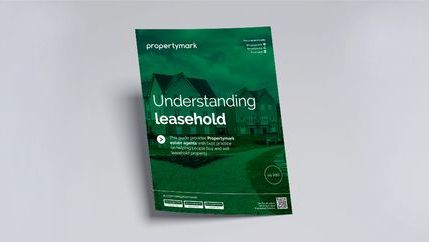
Understanding leasehold
This guide provides Propertymark estate agents with best practice on helping people buy and sell leasehold property. Estate agents have a level of responsibility under the Digital Markets, Competition and Consumers Act to pass on all material information in respect of a lease.