Homeowners need action now
The scale of the issue is significant. The UK Government estimates there were 4.9 million leasehold homes, mainly flats, in England in 2024/25, accounting for 20 per cent of all homes.
Flats play a vital role in the housing market, especially for first-time buyers in cities and areas where house prices are high. If leasehold flats are harder to sell, take longer to complete, or become unmortgageable, the impact goes beyond individual leaseholders. It affects housing mobility, supply, and confidence in the wider market.
We are calling for urgent action to make existing leasehold homes saleable, affordable, and transparent. The UK Government must:
- Review the proposed 40-year timeline for reducing ground rents to a peppercorn
- Improve access to redress so leaseholders can challenge service charges and remediation costs without lengthy and expensive court action
- Introduce a standard format for leases and lease terms and create an online database of existing lease terms
- Simplify building safety remediation funding and provide clearer legal guidance on who is responsible
- Set a fixed deadline for remediation with strong penalties for failure to meet it
- Consider financial support for leaseholders who want to purchase their freehold
- Accelerate the regulation of property agents through a statutory code of practice, qualifications, licensing and mandatory membership of professional bodies
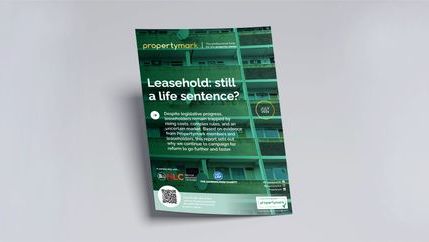
Leasehold: still a life sentence?
Despite legislative progress, leaseholders remain trapped by rising costs, complex rules, and an uncertain market. Based on evidence from Propertymark members and leaseholders, this report sets out why we continue to campaign for reform to go further and faster.
Slow progress has been made
Propertymark’s 2018 Leasehold: A Life Sentence? research helped bring the scale of the leasehold problem to public and political attention. Since then, there has been some progress, including the ban on ground rent for most new long residential leases from 30 June 2022, changes to enfranchisement rights, improvements to Right to Manage, and the UK Government’s stated aim to move towards commonhold.
The UK Government plans to replace leasehold with commonhold, but the transition will take time. While leasehold reform is needed, relying solely on commonhold could leave thousands of existing leaseholders without meaningful change for decades.
Our evidence highlights the need to support current leaseholders during the transition. However, it remains essential that reforms deliver meaningful and measurable change, creating a system that is fit for future generations.

Rising service charges are the biggest barrier to sales
Of the leaseholders surveyed who paid a service charge, 86% had seen an increase in the past 24 months, and more than one in four reported an increase of more than 60%. This makes it unsurprising that nearly two-thirds said the service charge had a large impact on their ability to sell their property.
A lack of transparency is also common: most respondents said they never received an explanation for the higher service charge and did not believe the increase accurately reflected the rise in costs, but that it was difficult or very difficult to challenge unfair charges.
Transparent, justified, and properly explained costs are essential. Propertymark members who provide management services have told us that where costs are clear and used to improve buildings, leaseholders are much more likely to accept the need to maintain communal areas.

Ground rent remains a live problem
The Leasehold Reform (Ground Rent) Act 2022 removed ground rent for most new long residential leases, but millions of existing leaseholders are still affected. 53% of leaseholders said ground rent had a large impact on their ability to sell. Mortgage lenders are also cautious where ground rents rise at regular intervals or where the lease does not clearly set out costs.
The UK Government’s draft Commonhold and Leasehold Reform Bill proposes to cap existing ground rents at £250 a year and reduce them to a peppercorn after 40 years – a timescale that we want to see reduced.
Building safety is still holding back the market
Although the Building Safety Act 2022 provides protections for qualifying leaseholders, Propertymark’s evidence shows that many people are still facing cost, delay, and uncertainty. 77% of our survey respondents living in properties with identified issues said the defect was still present, nearly a decade after the Grenfell Tower fire and four years after the Building Safety Act was passed.
For agents, the biggest issue is not simply that buyers are unwilling to purchase affected flats. More than half of Propertymark members who have faced additional challenges selling flats with cladding issues said the main problem was difficulty mortgaging those properties.
Lenders need certainty about whether a building will be remediated, who will pay, and what future costs the buyer may face. Without this, sales are delayed, buyers lose confidence, and leaseholders remain stuck.

Commonhold is important, but it is not enough on its own
Propertymark supports the transition to commonhold as the default tenure for new flats because it can remove ground rent, standardise ownership structures, and give homeowners more control over the management of their building.
However, the transition will take time. Relying on commonhold alone risks leaving existing leaseholders without the help they need for many years. Some leasehold properties may never convert, and those homeowners still need fair costs, clear information, and effective routes to challenge poor practice.
Eight years on, this report makes one thing undeniable: leasehold remains a life sentence. The NLC strongly support its findings.
Despite nearly a decade of commitments, progress has been too slow, too limited, and too easily diluted. As a result, too many leaseholders remain trapped — unable to sell, unable to move, and facing costs they cannot afford. This is not just a failure for leaseholders — it is a failure of the housing market. The evidence is clear. Estate agents identify three consistent barriers to selling flats: onerous service charges (74%), escalating ground rents (65%), and short leases (63%). The lack of implementation of leasehold reform is not only harming individuals — it is actively choking supply and confidence across the market.
The Government’s ambition to transition to commonhold is welcome, but it cannot be used as a substitute for action now. That transition will take years, potentially decades, leaving hundreds of thousands of existing leaseholders trapped in limbo. That is neither realistic nor acceptable. This report reinforces a simple but urgent truth: without immediate, targeted reform for existing leaseholders, the crisis will persist — for individuals, for families, and for the wider housing system.
The Government must now move beyond long-term ambition and deliver practical, enforceable solutions — because leaseholders cannot wait another decade for change

Eight years on, this report makes one thing undeniable: for millions of people, leasehold remains a life sentence. The National Leasehold Campaign strongly supports its findings.
Despite nearly a decade of promises, consultations and legislation, too many leaseholders remain trapped in homes they cannot sell, facing escalating service charges, unaffordable lease extension costs and ground rents that continue to blight the market.
This is no longer just a leaseholder crisis — it is a housing market crisis. The report's findings are particularly significant because they reflect not only the experiences of leaseholders, but also those of property professionals. Estate agents identified onerous service charges, escalating ground rents and short leases as the three biggest barriers to selling flats, demonstrating that leasehold is actively restricting mobility, reducing confidence and undermining the functioning of the housing market.
We welcome the Government's ambition to transition to commonhold, but commonhold cannot become an excuse for delaying meaningful reform for existing leaseholders. That transition will take years, and potentially decades, while millions remain trapped by a system that Government itself has repeatedly described as outdated and unfair.
The message from this report is clear: leaseholders cannot be expected to wait another decade for change. The Government must now accelerate the implementation of leasehold reform, including measures to tackle excessive and opaque service charges, regulate managing agents, make enfranchisement and lease extensions more affordable, and deliver meaningful protection for existing leaseholders.
The evidence has been gathered. The problems are well understood. What leaseholders need now is delivery.