
Fact sheets and FAQs
Featured document
Fact sheet: UK sanctions reporting obligations
Under the Sanctions and Anti-Money Laundering Act 2018, the UK Government introduced a new regime for issuing financial sanctions following the UK’s departure from the European Union. Under the Act, businesses specified in the Act have to report to the OFSI if they suspect they are engaging with a client who is under financial sanctions.
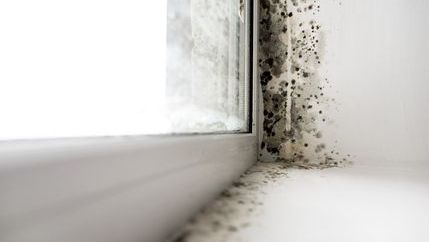
Fact sheet: The Investigation and Commencement of Repair (Scotland) Regulations 2026
New regulations introduce strict timescales for investigating and responding to damp and mould in rented homes across Scotland. Read this fact sheet to understand the new duties, the deadlines landlords must meet and what happens when action cannot be taken within the required timeframe.
Fact sheet: Housing (Cladding Remediation) (Scotland) Act 2024
A ministerial working group, established in 2020, sought to review the existing issues with cladding and found that the process for remediation was overly complex and was preventing the sale of homes. The Act is designed to help facilitate more buildings to have their cladding remediated to higher standards, so they are less likely to lead to further loss of life in the event of a fire.

Fact sheet: Lead in drinking water
In Scotland, the Tolerable Standard states that properties should have an adequate piped supply of wholesome drinking water. Statutory guidance on the Repairing Standard, which came into effect on 1 March 2024, now specifies that the property should be free of lead pipes from the boundary stopcock to the kitchen tap.
Fact sheet: Repairing Standard
The Repairing Standard was introduced through the Housing (Scotland) Act 2006 and is the minimum level of repair a house must achieve to be used as privately rented accommodation.
Fact sheet: Damp, condensation and mould in residential property
Tenants, letting agents and landlords all need to contribute to preventative measures to reduce the impact on living conditions and properties. Taking reasonable steps to tackle damp and mould is not only about looking after your health, it is your responsibility as a tenant.

FAQs: National Disability Strategy (UK)
On 28 July 2021, the UK Government published its National Disability Strategy, which sets out the their vision to improve the everyday lives of disabled people. Nearly half of disabled respondents to the UK Disability Survey reported having at least ‘some difficulty’ getting in and out of where they live.

FAQs: EWS1 Forms
In 2019, mortgage lenders across the UK began to seek assurance on the safety of external wall systems as a condition of approving applications. In recent years there has been concern that flats in high-rise blocks wouldn’t represent good security and that owners could be liable for remediation costs.

Fact sheet: Domestic abuse support for tenants
The PRS accounts for nearly 20 per cent of all households in England and houses more families than social housing. It's therefore good practice for letting agents have the confidence to respond appropriately and know what signs to look out for.
Fact sheet: Gas Regulations Danger Do Not Use Notices
Gas Safe registered engineers have a responsibility to advise landlords when they find dangerous gas installations in a property.
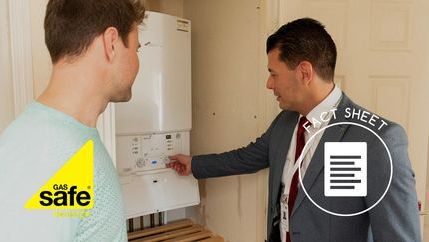
Fact sheet: Landlords’ Legal Responsibilities for Gas Safety (Scotland)
Landlords in Scotland must ensure that all properties they let to tenants have a carbon monoxide detector fitted regardless of when the tenancy started.

Fact sheet: Electrical installations and appliances for landlords in Scotland
The Housing (Scotland) Act 2014 amended the Repairing Standard to make it a legal requirement for landlords to carry out electrical safety inspections, which includes testing portable appliances in private rented property.
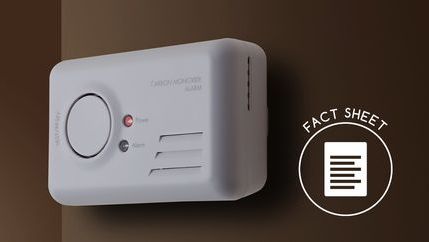
Fact sheet: Scottish Government’s guidance for fitting carbon monoxide detectors for landlords
Landlords became legally responsible for fitting carbon monoxide (CO) detectors in their properties from December 2015. The aim is to reduce the risk of CO poisoning and the resulting loss of life and serious injury.

Fact sheet: Construction (Design and Management) Regulations 2015
The Construction (Design and Management) Regulations came into force on 6 April 2015. They apply to the landlord of a domestic residential property, where construction is being carried out.

Fact sheet: Legionella
Landlords must assess and control the risk of exposure of tenants to legionella to ensure the safety of their tenants, but this does not require an in-depth detailed assessment.