Propertymark’s long-standing position
We are a member of the Cutting the Cost Coalition, a group formed to collaborate on reforms to Local Housing Allowance, and we attend the Department for Work and Pensions Private Rented Sector Forum, having been instrumental in its reintroduction following the COVID-19 pandemic.
The concerns raised by the Scottish Housing Secretary echo what Propertymark has long said about the knock-on effects of inadequate housing support. We have repeatedly warned that freezing LHA during a period of rising rents undermines affordability in the private rented sector and reduces access to housing for those who need support most. Our policy work shows that when LHA does not reflect real rents, the financial burden is pushed onto other tenants, landlords, and local authorities.
In Scotland, freezing rates of support in 2026-27 will mean that 87 of the 90 LHA rates will fall below the 30th percentile of local market rents. The Scottish Government estimates that around 45,000 households in Scotland, including approximately 31,000 children, could be adversely impacted by the end of 2026-27.
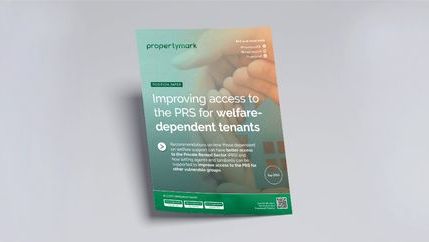
Improving access to the PRS for welfare-dependent tenants
Includes recommendations on how those dependent on welfare support can have better access to the Private Rented Sector (PRS), and how letting agents and landlords can be supported to improve access to the PRS for other vulnerable groups.
What needs to happen next
Propertymark is calling on the UK Government to respond to the concerns raised in our welfare position paper and reiterated by the Scottish Government, and take decisive action on LHA. This must include:
- Restoring LHA rates to at least the 30th percentile of local rents
- Committing to annual uprating so rates keep pace with market changes
- Providing certainty to renters, landlords, and agents that housing support will remain fit for purpose
McAllan’s intervention underlines that this is not a short-term issue or one confined to a single nation. It is a structural problem that requires a UK-wide solution.
Raising LHA rates is one of the most direct ways the UK Government can support access to the private rented sector, reduce homelessness, and ease pressure elsewhere in the system. It would not only improve affordability but also increase confidence among landlords and letting agents to house tenants in receipt of benefits. This is particularly important given the ongoing shortage of social housing and the growing reliance on the private rented sector to meet housing need.
Propertymark will continue to lobby the UK Government to ensure that housing support policies reflect the realities of today’s rental market and support access to safe, secure, and affordable homes across the private rented sector.

Why the LHA freeze matters
LHA determines the maximum amount of housing support private renters can receive through Universal Credit or Housing Benefit. Rates were frozen in April 2021 and, despite a temporary uplift in some areas, have not kept pace with sharp increases in market rents across the UK.
As a result, many renters now face a widening gap between their rent and the support available to them, with research showing that just 2.7% of private rental listings are now affordable to those on housing benefit, down from 12% in 2021–22. This shortfall often must be met from already stretched household budgets, increasing the risk of arrears and tenancy breakdown.
Propertymark’s members report that this mismatch is also affecting landlords’ willingness to let to tenants who rely on housing support, particularly in higher-cost areas where the rates fall furthest behind local rents.
Restoring LHA to cover at least the bottom 30% of rents would lift 75,000 children and 125,000 adults out of poverty across the UK, thereby preventing thousands from falling into homelessness, easing pressure on councils and temporary accommodation.