The UK Government will now work with local authorities, developers, and communities to assess each of the proposed locations in more detail.
Further announcements are expected as plans progress, including timelines, delivery models, and how infrastructure will be funded.
Propertymark’s view
We recognise that new towns can play an important role in increasing housing supply and supporting economic growth. However, they must be delivered alongside a broader strategy that reflects the complexity of the housing crisis.
Propertymark has consistently called for a balanced approach that includes both large-scale developments and smaller, faster-to-deliver projects. This includes expanding existing towns and cities and enabling a wider range of developers to contribute to housing targets.
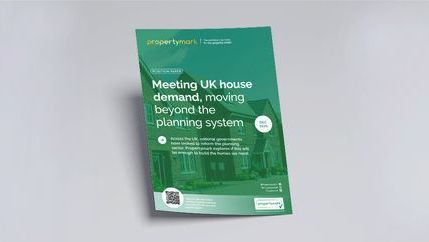
Our position paper, Meeting UK Housing Demand: moving beyond the planning system, examines the wider picture, including the historic role of local authorities in delivering housebuilding programmes, the roadblocks that hold up developments once they gain planning permission, and the capacity of the construction industry to build the homes we need.
Where could the new towns be built?
Seven areas have been identified as potential locations for new towns. These are:
- North Essex
- Cambridge
- East Midlands
- West Midlands
- Yorkshire
- Greater Manchester
- South West England
These locations have been selected based on their potential to support significant development, improve connectivity, and unlock land for housing at scale.
Each site will now be subject to further assessment, including feasibility, infrastructure requirements, and local engagement, before any final decisions are made.

A renewed focus on large-scale development
The new towns programme is intended to deliver large numbers of homes alongside transport links, schools, healthcare, and other key infrastructure. The Government has indicated that these developments will be designed as long-term, sustainable communities rather than standalone housing schemes.
This approach reflects a broader policy direction that places large-scale developments at the centre of efforts to increase supply. However, Propertymark has previously highlighted that relying heavily on major projects can create delays, as larger schemes typically take longer to secure planning permission and complete construction.

What this could mean for property professionals
New towns on this scale will not only deliver thousands of homes but also bring with them schools, transport links, and new amenities. These changes have the potential to reshape entire local markets and could offer opportunities for agents to support local promotion and provide valuable sales and marketing insight.
In the rental market, demand is likely to grow quickly as new housing comes forward. In the early years, before ownership patterns bed in, many households could turn to the private rented sector, increasing the need for letting agents to source tenants, manage compliance, and provide ongoing management services. With a large proportion of affordable homes expected, agents may also encounter new frameworks for handling affordable private rent schemes, opening further areas of work.
The wider regional impacts will also be significant. New towns could alter the balance of supply and demand in surrounding areas, changing the outlook for rental yields, sales values, and housing availability. For agents, this means keeping a close eye on market shifts and being ready to adapt. At the same time, neighbouring communities may benefit from investment in transport, schools, and infrastructure, creating knock-on opportunities for sales and lettings in those areas too.