The Housing Health and Safety Rating System (HHSRS) has been in place since 2006 and has not been fully updated since it was introduced. The system was often seen as complex, resource-intensive, and difficult for landlords, tenants and housing providers to understand. The 2026 changes are designed to make assessments clearer, simpler and more consistent, and to help local authorities enforce housing standards more effectively.
View the Housing Health and Safety Rating System (England) (Amendment) Regulations 2026 →
Letting agents play a key role in identifying risks early, advising landlords, and helping to ensure repairs are completed before hazards escalate. Agents should use the update to the HHSRS as an opportunity to review their procedures, brief staff, and ensure landlords understand what is expected.
What is the HHSRS?
The HHSRS is the risk-based assessment tool used by local authorities to identify hazards in residential properties. It considers the likelihood of harm occurring and the seriousness of the possible outcome.
If a council identifies a Category 1 hazard, it has a duty to take enforcement action. If it identifies a Category 2 hazard, it has discretion to act.
The system applies across residential housing, including privately rented homes. It is also closely linked to the Homes (Fitness for Human Habitation) Act 2018 because HHSRS hazards are used to help decide whether a property is suitable for occupation.
Reorganising, relabelling, and simplifying
The number of prescribed hazard descriptions will be reduced from 29 to 21. This is being done by combining some existing hazards into broader categories. For example, several hazards will now sit under wider headings such as indoor air pollutants, domestic hygiene, falls on the level, fire and explosions, and collisions, entrapment and ergonomics.
The existing A to J hazard bands will be replaced by three bands: High, Medium and Low. High hazards will broadly replace the previous Category 1 bands, while Medium and Low hazards will sit within Category 2. This should make it easier for agents, landlords and tenants to understand the seriousness of a hazard.
The four classes of harm will also be renamed. The previous Classes I to IV will become Extreme, Severe, Serious and Moderate. This is a labelling change, but it should make the system easier to explain.
The scoring method will be simplified. Assessors will still consider the likelihood and severity of harm, but the numerical system will be updated to make outcomes clearer and easier to apply consistently.
The definition of a prescribed fire hazard will also be expanded. It will cover risks linked to uncontrolled fire and associated smoke and fumes, explosions, and the collapse of a building, or part of a building, because of fire or explosion.

Common risks agents should watch for
Falls remain one of the most common serious hazards in rented homes. Agents should look out for uneven flooring, loose carpets, poor lighting, unsafe stairs, missing handrails, low windowsills, and unsafe balconies.
Excess cold is another major risk, particularly where heating is inadequate, insulation is poor, damp is present, or tenants cannot properly control the heating system.
Damp and mould should be investigated and not dismissed as lifestyle related. Agents should look for possible structural causes, leaks, blocked gutters, poor ventilation, inadequate heating or defective insulation.
Fire risks must also be considered carefully. This includes smoke and heat detection, safe means of escape, electrical safety, overloaded sockets, unsafe appliances and fire risks in HMOs.
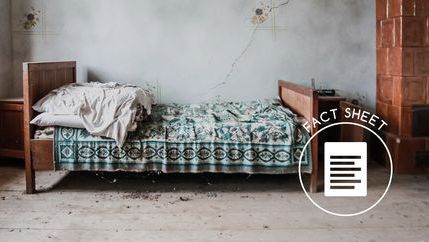
Fact sheet: Homes (Fitness For Human Habitation) Act 2018
This Act replaces Section 8 of the Landlord and Tenant Act 1985 (LTA 1985) in England, with the purpose of improving living standards in the private and social rented sectors.
Fact sheet: Damp, condensation and mould in residential property
Tenants, letting agents and landlords all need to contribute to preventative measures to reduce the impact on living conditions and properties. Taking reasonable steps to tackle damp and mould is not only about looking after your health, it is your responsibility as a tenant.