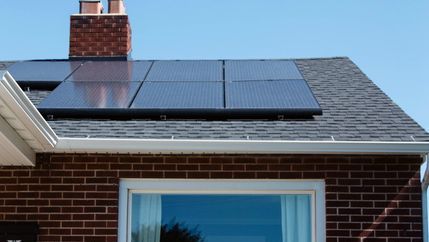
As part of the UK Government’s Warm Homes Plan, £1.7 billion has been allocated to a new Warm Homes Fund, which is intended to support low- and zero-interest consumer loans to help spread the upfront cost of improvements, including insulation and low-carbon heating.
Propertymark supports the ambition to reduce energy bills and improve the energy efficiency of homes. In our evidence to the Department of Energy Security and Net Zero (DESNZ), we set out our recommendations to ensure the Fund successfully reflects the financial and practical realities facing property owners, landlords, agents, and occupiers.
Recognition of high upfront costs as a major barrier
We are pleased to see DESNZ acknowledge that uptake of low-carbon technologies – such as heat pumps - is hampered by the financial burden on property owners. A one-size-fits-all model simply does not work across older, lower-value, or harder-to-treat properties. Affordable, flexible, and long-term financial products are needed to support households in upgrading their properties.
The financial position of private landlords must also be fully considered. Unlike owner-occupiers, landlords do not directly benefit from lower energy bills after works are completed. This creates a split incentive, where the landlord pays for improvements, but the tenant receives the main financial benefit.
Without accessible and tailored support, there is a risk that new requirements could push some landlords to sell, reducing the supply of rental homes and further increasing pressure on tenants.

Green finance must be more attractive
Propertymark research has shown that buyers do not yet value higher EPC ratings enough for owners to see a clear return on investment, especially as current finance models do not always reflect the complexity of different property types. The cost of improving homes varies significantly, particularly for older properties, solid-wall homes, heritage buildings and flats.
Additionally, EPCs do not yet provide clear, trusted, and staged improvement plans that link directly to finance products. Property owners need to understand which measures are suitable, what sequence they should be completed in, and how improvements will support compliance and reduce bills.
Green finance should be paired with meaningful fiscal incentives, including an updated Landlord Energy Saving Allowance, allowing retrofit costs to be offset against rental profits, enabling energy efficiency works to be recognised for Capital Gains Tax purposes, and exploring Stamp Duty and Council Tax incentives linked to verified improvements.

Low-income households must not be missed
Support aimed only at owner-occupiers or social housing providers would miss many low-income households who rely on the private rented sector (PRS) because of the shortage of social housing.
Eligibility should be linked to the property and its energy performance, rather than the personal circumstances of the current tenant. An approach based on property need, such as targeting PRS homes with EPC ratings of D, E, F or G, would reduce barriers and help improvements remain in the housing stock for future tenants.
A fabric-first approach is essential
Low-carbon technologies such as heat pumps, solar panels, and battery storage can play an important role, but they will not deliver the expected benefits if the building itself is poorly insulated.
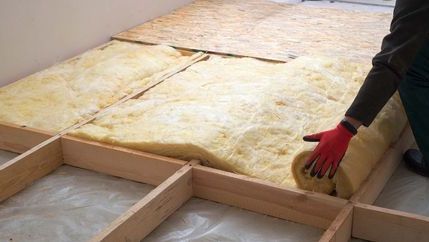
For many homes, particularly older and lower-value properties, basic fabric improvements such as loft insulation, cavity wall insulation, solid wall insulation, draught-proofing and high-performance glazing will be the most practical first step.
A phased insulation programme may be more achievable and more effective for landlords than expecting immediate investment in high-cost technologies.

Advice, quality assurance, and local delivery
The retrofit process is complex, and many landlords and homeowners do not know where to start. Propertymark has called for the Warm Homes Fund to support independent advice services for consumers and landlords.
Local authorities could play a key role by offering one-stop-shop advice services, supported by central government. These services could help property owners understand suitable measures, available funding, sequencing of works and trusted installers.
We have also called for stronger post-installation checks and quality assurance. If property owners take on debt but the works do not reduce energy use or bills, confidence in the scheme will be damaged.
Quality control is particularly important given the previous problems with retrofit schemes where poor installation and technical non-compliance reduce consumer confidence.
Non-domestic and mixed-use buildings need clarity
The lack of long-term policy certainty around minimum energy efficiency standards for commercial property makes it difficult for landlords, investors, and businesses to plan or commit to major expenditure.
Mixed-use buildings also present specific challenges, including complex ownership structures, leasehold arrangements, and split incentives between freeholders, leaseholders, commercial tenants, and residential occupiers.
The Warm Homes Fund could help by providing low-interest or government-backed loans for smaller landlords, SMEs, mixed-use building owners and community organisations. Repayment terms must be long enough to reflect the cost and lifespan of retrofit works.
Propertymark believes funding should focus on SMEs, hospitality and retail, as these businesses often occupy older premises, face high energy costs, and lack access to suitable finance. Supporting these sectors would also help town centres and high streets become more resilient.