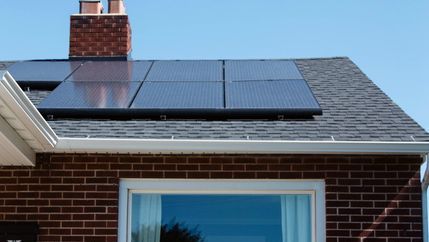
Targets must be achievable across the UK’s mixed housing stock and realistic in terms of property values, ultimately, the Warm Homes Plan will only be meaningful if the pathways are properly supported. Without certainty, genuine flexibility, and practical financial support, there is a serious risk that both residential and commercial landlords will withdraw properties from the market, reducing supply, driving up costs for tenants and businesses, and ultimately undermining the UK Government’s stated objectives on affordability, energy efficiency, and economic growth.
EPC campaign win for Propertymark
PRS homes must meet EPC Band C by October 2030 unless an exemption applies. This extended deadline is a welcome change and something that Propertymark met with the energy minister to campaign for. Properties meeting EPC C before October 2029 will be treated as compliant until that EPC expires.
Landlords will be able to choose which upgrades work best for their property, and a spending cap of £10,000 will apply. Improvements made from October 2025 will count towards the cost cap. If £10,000 would represent 10% or more of the property value, a low-value property exemption will apply.
Boiler Upgrade Scheme (BUS) grants will remain available to landlords in England and Wales. Plus, personal investments can be eligible as an allowable expense and tax-deductible.
We are pleased that a more realistic cap has been set following our response to the UK Government’s proposals in 2025, where we shared overwhelming concerns from members that a higher cap would price landlords out of the market or lead to rent hikes that ultimately harm tenants. A lower cap will better support affordability and allow landlords to make incremental, impactful improvements.
Expansion of the Boiler Upgrade Scheme
The BUS offers grants to help households and small businesses in England and Wales switch to clean heating. Under the Warm Homes Plan, grants of £7,500 towards the cost of installing hydronic heat pumps will be maintained, and new grants of £2,500 will be introduced towards the cost of installing air-to-air heat pumps and heat batteries for central heating. Up to £5,000 for biomass boilers for whole-house heating and hot water will also continue for eligible properties in rural areas.
The additional grant funding is a step in the right direction and reflects Propertymark’s feedback to the Department for Energy Security and Net Zero (DESNZ) as part of their consultation on the future of the BUS, where we made clear that a more ambitious scope was needed to help overcome the barriers landlords face in meeting the UK Government’s energy efficiency ambitions.

Reform of Energy Performance Certificates (EPCs)
The single headline rating currently used for domestic EPCs will be replaced with four clearer metrics covering energy cost, fabric performance, heating systems and smart readiness. This new format is designed to provide homeowners and occupiers more meaningful and actionable insight into a property’s energy performance, while enabling more targeted action on priorities such as fuel poverty and net zero. The existing ten-year validity period will be retained to avoid unnecessary costs, with voluntary EPCs still available for those seeking early guidance. The UK Government aims to introduce the new EPCs from October 2026.
Consumer loans only support homeowners…for now
£1.7 billion has been earmarked for a new Warm Homes Fund (WHF) to support low- and zero-interest consumer loans, aimed primarily at owner-occupiers, to help spread the upfront cost of upgrades such as insulation and low-carbon heating.
The UK Government will launch a call for evidence early in 2026 to explore how the WHF could benefit other sections of the market, including private and social landlords, investors, and supply chains.
The plan highlights quality and consumer protection, after problems in previous schemes. It cites audits showing 92% of external wall insulation installations under ECO4 and the Great British Insulation Scheme had at least one major technical non-compliance, thus reducing consumer confidence.
To address this, a new government body - the Warm Homes Agency – will be established to coordinate, oversee and accelerate the delivery of home upgrades across the UK. Its role is to lead the large-scale rollout of energy efficiency improvements and clean energy technologies by bringing together existing delivery organisations, local authorities, regulators and industry under a single, streamlined approach. The aim is to make upgrading homes simpler, faster and more trusted for consumers, while ensuring the government’s investment delivers maximum impact at scale.
In the private rented sector, landlords are being asked to deliver, in many cases, substantial and costly upgrades to reach EPC C by 2030, yet this is being imposed without clear, long-term funding commitments, realistic delivery timescales, or sufficient flexibility for older, complex, and hard-to-treat properties. A phased and realistic approach would allow landlords to maintain the Decent Homes Standard, manage costs effectively, and contribute meaningfully to the UK Government’s ambition to achieve net zero by 2050.
Crucially, there remains no clarity on Minimum Energy Efficiency Standards for non-domestic property, despite expectations that commercial landlords will be required to meet EPC B by 2030. The absence of detail on interim targets, exemptions, enforcement, and financial support makes it impossible for landlords to plan responsibly or invest with confidence.