
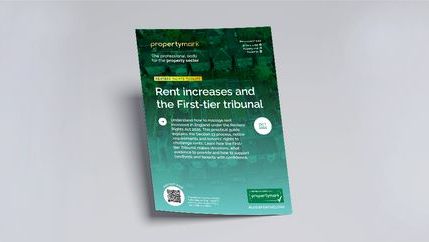
Rent increases and the First-tier tribunal
This practical guide explains the Section 13 process, notice requirements and tenants’ rights to challenge rents. Learn how the First-tier Tribunal makes decisions, what evidence to provide and how to support landlords and tenants with confidence.

Councils can wield empty homes powers sooner
Local authorities in England will be able to apply for Empty Dwelling Management Orders (EDMOs) for homes left empty for six months, rather than two years, from 5 November 2026. This is a positive move, although EDMOs should be used only as a last resort. The measures could be enhanced by adding a requirement for local authorities to consult a qualified agent to speed up the process of returning stock to the market.

Empty homes need action, not just higher tax
We have taken our campaign to unlock empty homes directly to the Senedd, urging policymakers to widen access to funding, recognise private landlords as housing providers, and assess whether council tax premiums are bringing properties back into use. In an evidence session on 21 October 2026, our Head of Policy and Campaigns, Timothy Douglas, highlighted the need for practical support for owners, better housing data, and properly funded local authority teams.

Domestic abuse protections strengthened in Social Housing Bill
Survivors could gain stronger rights to remain in their social homes whilst their abuser is removed under new proposals in the Social Housing Bill, which aims to protect social housing stock in England, support investment, and improve security for tenants. The Bill is progressing through the parliamentary process and could become law in the first half of 2027.

Propertymark's Regulatory Board brings together leading industry expertise
Established six months ago following an extensive selection process, Propertymark’s Regulatory Board brings together leading expertise in professional regulation, consumer protection, governance, and the property sector, including individuals with experience at some of the UK’s most respected regulatory organisations.

EV charging plans could change how agents handle requests
Tenants and leaseholders in England could gain a clearer route to installing electric vehicle (EV) charge points under ‘ability to charge’ proposals, which aim to make permissions quicker and more consistent. A new UK Government consultation focuses on homes with off-street parking, including rented, leasehold, and shared ownership properties.

Could your next tech connection help transform property?
Applications are open for REACH UK’s 2027 program, which supports technology businesses tackling challenges across the property sector. Propertymark’s relationship with REACH goes back to its UK launch in 2020, and we’re encouraging members to share the opportunity with businesses developing tools that could improve how property professionals work.
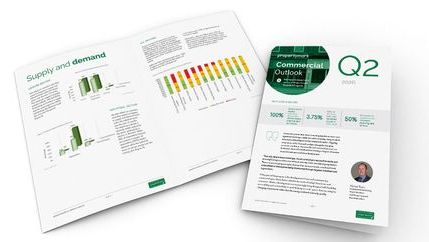
Commercial Outlook Q2 2026
This report highlights continued economic uncertainty across the commercial property sector, with expectations of steady industrial demand, increased supply of pubs and restaurants, and varying sentiment around capital values and investment yields.

Bill tightens cladding deadlines and accountability
The UK Government aims to deliver new legislation which speeds up the removal of unsafe cladding, strengthens enforcement against those delaying work, and gives public authorities powers to step in when remediation stalls. For managing agents, the proposals could bring greater scrutiny of assessments, project progress, and communication with residents.

Healey must unfreeze LHA as older renters cut essentials
New evidence that pensioners are going without food and heating adds greater urgency to our longstanding call for the UK Government to re-link Local Housing Allowance (LHA) to market rents. At the Autumn Budget on 28 October 2026, the Chancellor must restore rates to cover at least the cheapest 30% of local rents, backed by annual increases to prevent support from falling behind again.

Rent reviews under scrutiny: lessons from four tribunal decisions
A proposed rent increase can lead to a smaller rise or even a reduction in the rent already payable. We have examined four recent First-tier Tribunal decisions made in August and September 2026 involving properties in Leeds, Manchester, Ashton-under-Lyne, and London. Each shows how the property’s market rental value was assessed and highlights why letting agents and landlords need clear rental evidence, accurate property descriptions, and a realistic assessment of condition.

London Plan must turn housing ambition into homes people can live in
The capital’s draft planning strategy proposes more than half a million new homes over ten years, alongside investment in infrastructure, commercial space, and greener neighbourhoods. We support these ambitions, but our members’ experience across London’s property sectors highlights the gap between identifying land for housing and delivering homes that can be financed, built, and occupied. We have called for a more practical approach to delivery that gives greater recognition to the role of the private rented sector and existing buildings.

Auctions Barometer: Q2 2026
The latest Auctions Barometer highlights the sector’s resilience despite economic uncertainty. Nine in ten members surveyed reported stable or increased numbers of lots achieving their reserve price, while 55% saw an increase in lots exceeding reserve prices. The report explores auction performance and key challenges facing the sector.

Flood certificates to give home movers a clearer picture of risk
Buyers in England could soon be presented with standardised upfront information about how a property would cope with flooding, the protection already installed, and recommendations for improvements. The UK Government and Flood Re have announced that the first pilots of the Flood Performance Certificate (FPC) will begin this winter, targeting at-risk areas, with a broader roll-out planned throughout 2027 and beyond.

Housing Insight Report: August 2026
August’s figures reveal a housing market where activity continues, but buyers are taking a more cautious approach, making realistic pricing and negotiation increasingly important. Meanwhile, growing tenant demand and limited rental supply continue to create challenges across the lettings market, highlighting the different pressures facing buyers, sellers, landlords and renters.

Landlords are paying more for everything. Here's one place agents can still find them savings
In the last two years, landlords have seen more expensive mortgages and rising compliance costs. The Renters' Rights Act has changed how tenancies work and what happens when things go wrong. And now there's an annual fee to register each property on the new database, one more line on a spreadsheet that only ever grows in one direction. None of that is going away. However, as Propertymark Industry Supplier Homebox explains, agents still can ensure their landlords feel like someone is actively working to bring their costs down.