
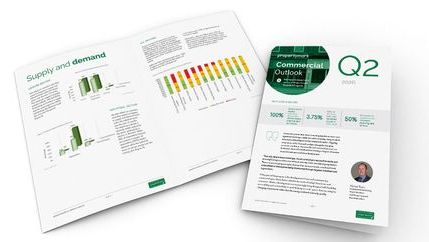
Commercial Outlook Q2 2026
This report highlights continued economic uncertainty across the commercial property sector, with expectations of steady industrial demand, increased supply of pubs and restaurants, and varying sentiment around capital values and investment yields.

Taking member voices to the heart of the latest housing announcements
Prime Minister Andy Burnham has proposed a new scheme to allow first-time buyers in England to purchase a new-build home with a 2.5% deposit, along with plans to let councils intervene sooner when homes stand empty, and a £210 million package to bring disused high street buildings back into use. Propertymark’s Policy and Campaigns Team is at the Labour Party conference to discuss these announcements directly with MPs and explain how members and their clients could be affected.

Remove technical traps and reflect commercial reality in business tenancy reform
The Law Commission’s latest proposals aim to make business tenancy renewals clearer, quicker, and better suited to the modern commercial property market. While we welcome most of the proposed changes, we have highlighted important caveats where caution is needed to prevent a rise in disputes and to ensure that all parties have adequate protections.

Commercial agents can help tenants avoid missed tax returns
Revenue Scotland has refreshed its guidance on how Land and Buildings Transaction Tax (LBTT) applies to leases. The update does not introduce new tax rules but provides a useful reminder that further returns may be required when a lease is reviewed, varied, assigned or ended. By treating LBTT as an ongoing responsibility, rather than a one-off task at the start of a lease, property professionals can support compliance by building tax prompts into their lease processes.

Tribunal route changes for some older lease disputes
Commercial property agents handling telecommunications sites in England and Wales should note a change to where disputes under the Landlord and Tenant Act 1954 are decided. From 30 July 2026, certain disputes fall within the jurisdiction of the First-tier Tribunal and Upper Tribunal, rather than the courts.

Revised MEES plan drops 2027 EPC deadline for large commercial rentals
From 2031, privately rented non-domestic buildings over 1,000 sqm in England and Wales will be expected to meet EPC B, where it is cost-effective. Buildings below 1,000 sqm are expected to remain as the current minimum EPC E. The Department for Energy Security and Net Zero (DENZ) has stated the changes will only take effect after Parliament has passed secondary legislation.
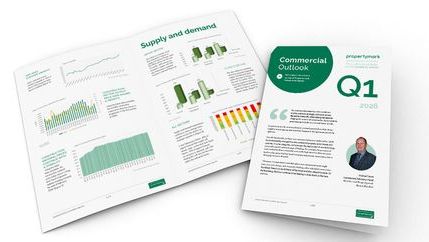
Commercial Outlook Q1 2026
The commercial property sector continues to play extreme strategic relevance across the entire of the UK, often taking the lead on shaping the success of communities by accurately provisioning to both current and future needs.

Consultation is imperative before commercial rent review ban takes effect
The English Devolution and Community Empowerment Act 2026 includes measures to prohibit upward-only rent reviews in new business leases in England and Wales. Propertymark supports measures that help businesses access suitable premises and contribute to stronger high streets. However, changes to commercial lease structures must also maintain confidence for landlords and investors who fund, maintain, and improve commercial property.

New laws to identify potential land use
The UK Government has published draft regulations introducing a new disclosure regime for land agreements that give control over development without transferring ownership. The rules, which will apply in England and Wales, stem from the Levelling-up and Regeneration Act 2023 and are expected to come into force on 6 April 2027.
New business rates valuations come into force
For over two million non-domestic properties across England, new rateable values have come into effect from 1 April 2026, marking the start of the latest three-year business rates cycle that will run until March 2029 and is expected to have significant implications for commercial property agents, landlords, and tenants navigating changing market conditions.

Commercial Outlook Q4 2025
Latest insights reveal the sector is showing growing resilience, with easing inflation, a lower base rate, and rising rents helping to rebuild confidence despite ongoing structural challenges. Shifting consumer behaviour, targeted regeneration, and smarter use of data and technology are set to define the next phase of commercial property growth.

More homes and local investment promised by 30-year funding deals
The UK Government has announced long-term investment packages for new and expanded Mayoral Combined Authorities (MCAs), with a clear focus on unlocking housing delivery and revitalising high streets. These agreements will give local leaders devolved powers and funding settlements to drive regeneration, build new homes, and support economic growth.
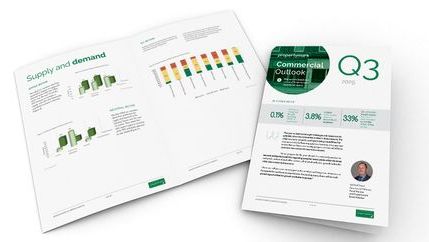
Commercial Outlook Q3 2025
Stability is returning to the UK commercial property market as stats and sentiment reveal steady base rates, easing inflation, and renewed confidence across industrial and office sectors.

Councils to get clearer powers to tackle vacant and neglected buildings
The Northern Ireland Dilapidation Bill aims to modernise and consolidate the rules which equip local authorities to tackle run-down, dangerous, or dilapidated buildings and land. It creates a single toolkit to support earlier action to protect amenities, aid regeneration, and keep people safe. The overall direction of the legislation is sound, and Propertymark is engaging with Ministers and MLAs to make improvements so that it will work better in practice.
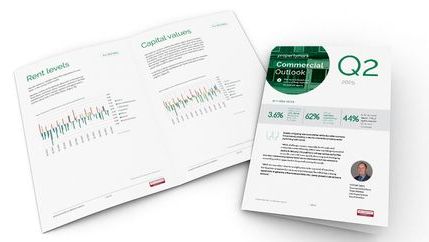
Commercial Outlook Q2 2025
The second quarter of 2025 shows the commercial property sector is balancing short-term challenges with long-term opportunities, as agents report shifting confidence across sectors.
Red tape cut as UK Government takes aim at struggling high streets
Reforms announced are going to make it easier and cheaper for empty commercial units to be turned into hospitality venues will be introduced to support efforts to boost footfall and revitalise town centres.