While the UK Government has confirmed its intentions, many changes will be subject to further consultation and development. A further response covering the remaining parts of the consultation is expected before the end of 2026.
We have repeatedly stressed that agents and property owners need sufficient time to prepare for reforms, particularly where changes could impact property values, compliance requirements, or investment decisions. This is especially important for landlords who are already planning improvements needed for properties to meet EPC C by the 2030 deadline.

Westminster decision delays reform in Scotland
Because new style EPCs will not now be available until the second half of 2027, the Energy Performance of Buildings (Scotland) Regulations 2025 cannot be fully implemented on 31 October 2026 as planned. The current EPC system will remain in force until further notice.
This will impact agents and landlords already planning for the proposed minimum energy efficiency standards currently expected in 2028 (for new tenancies) and 2033 (for all remaining PRS properties).
A shift towards better accuracy and usability
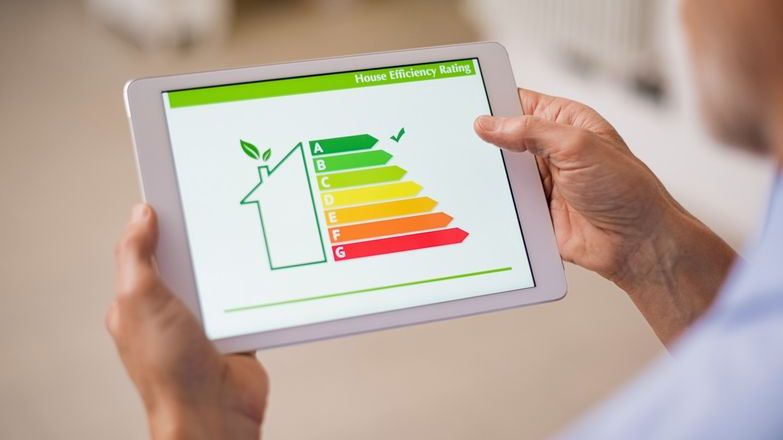
The single headline rating based purely on cost efficiency will be scrapped for homes. Instead, a broader set of metrics will be introduced: energy use, fabric performance, heating system, and smart readiness. This will be supplemented with secondary metrics measuring energy demand and carbon emissions.
This reflects Propertymark’s long-standing position that EPCs must provide more meaningful and actionable information for consumers. In our response to the consultation, we supported a move towards a more holistic system that better reflects how buildings perform and gives clearer guidance to property owners and tenants.
While the direction of travel aligns with our recommendations, we await further details on how these metrics will be presented and understood by consumers.

Continuity for non-domestic property
The single carbon-based Environmental Impact Rating (EIR) will remain as the headline metric, which the UK Government states will support businesses in the net zero transition, enable them to report on their emissions, and facilitate ongoing compliance with non-domestic MEES regulation.
The original consultation suggested that new primary or secondary metrics could be added over time, but no further information has yet been published on this.
When an EPC is needed
It has not yet been confirmed whether private rented properties will be required to always maintain a valid EPC. The Department for Energy Security and Net Zero (DENZ) and the Ministry of Housing, Communities and Local Government (MHCLG) state that they will engage with the property sector to ensure that new EPC rules and PRS MEES regulations interact effectively to avoid undue burdens on landlords.
However, MHCLG and DESNZ have confirmed that valid EPCs will be required for a whole HMO when a single room is let, short-term rental properties, irrespective of who pays energy bills, and for heritage properties, which will no longer be exempt. Regulations will also be updated so that an EPC is required at the point of marketing a property rather than at the point of sale or rent.

Improving data quality and accessibility
We strongly support the UK Government’s commitment to improving the accuracy and reliability of EPC assessments, including reforms to how data is collected and how assessors are trained and monitored.
Inconsistent assessments and poor-quality data in the current system undermine confidence in EPCs and limit their usefulness for agents and consumers alike. Greater standardisation and oversight should help ensure EPCs become a more trusted tool across the property sector.
Modernising the EPC system by improving digital access to certificates and potentially integrating EPC data with other property information is also a positive step to help streamline transactions and improve transparency for buyers, sellers, landlords and tenants.
Propertymark engagement and support
We welcome the UK Government’s recognition that EPCs need to evolve, and that the current system does not fully meet the needs of the modern property market.
However, further clarity is essential. Propertymark will continue to engage with policymakers in the UK and devolved Governments to ensure reforms deliver a system that is accurate, practical, and supports both consumers and property professionals.
We provide members with consistent educational resources and regular updates on energy-related policies, particularly regarding the transition to sustainable energy practices.

Energy efficiency
The UK housing stock is amongst the least energy efficient in Europe and the Committee on Climate Change says that energy use in homes accounts for about 14 per cent of UK greenhouse gas emissions. Non-domestic buildings account for around one-third of UK emissions from the building stock.