
Leasehold reform
In January 2026, the UK Government published a draft Commonhold and Leasehold Reform Bill, which will apply to England and Wales.
The legislation proposes making commonhold the default tenure for new flats by restricting the granting or assigning of long leases on new flats and modernising the commonhold framework, including development rights, to support developers to build commonhold properties while strengthening consumer protections on incomplete developments.
For older leases, ground rents will be capped at £250 per year, reducing to a peppercorn after 40 years, and forfeiture will be abolished and replaced with a statutory lease enforcement scheme. Rules will be changed so rentcharge (maintenance charge) arrears can only be recovered through proportionate means, such as cost recovery clauses or the small claims court.
The Bill also creates a new right for leaseholders in flats to request improvements, such as a gigabit-capable broadband connection.
Propertymark acknowledges the UK Government’s ambition to make commonhold the default tenure for new flats and to strengthen leaseholder rights. However, reform must be carefully phased to avoid market disruption and ensure existing leaseholders, property agents, and developers can transition effectively to any new system. We have consistently called for clearer standards, improved transparency around service charges, professional qualifications for property agents, and practical reforms that improve consumer confidence across the housing market.
Unsafe cladding and building remediation
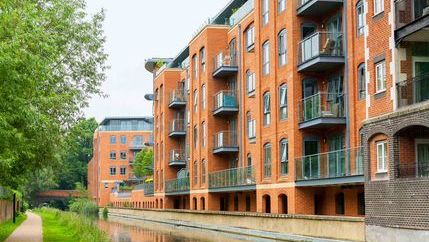
A Remediation Bill will be brought forward to speed up the removal of unsafe cladding and strengthen protections for residents, supporting the UK Government’s remediation acceleration plan, which aims for all high-rise buildings of 18 metres and above to have works completed, and all buildings of 11 metres and above to at least have a scheduled completion date, by the end of 2029.
The proposals include a legal duty on landlords to remediate unsafe cladding, stronger enforcement powers for regulators, and severe consequences for those who fail to act.
It is positive to see plans to accelerate remediation works and strengthen accountability for unsafe buildings. Leaseholders and residents have faced unacceptable delays and uncertainty for too long. The UK Government must ensure remediation funding, enforcement powers and clear legal responsibilities are implemented quickly so that affected residents are protected, and confidence can return to the housing market.

Right to Buy reforms
Plans to overhaul the scheme have already been announced. The minimum eligibility period will be raised from three years to 10 years before tenants can apply to buy their home. Discounts would start at 5% of the property value and increase by 1% each year, up to a maximum of 15% of the property value or the cash cap, whichever is lower.
The reforms would also introduce an exemption for new build social homes so they could not be sold under the scheme for 35 years after construction.
Further long-term investment in social housing will be brought forward by a Social Housing Renewal Bill, which will include measures to increase stock and create a fairer tenancy system.
‘Tourist tax’ for England
An Overnight Visitor Levy Bill will progress the Labour Government’s manifesto commitment to devolving revenue-raising powers to local authorities. Mayoral strategic authorities in England could be given a discretionary power to introduce local overnight visitor levies like those already in place in Scotland and Wales.
The UK Government consulted on the proposal in November 2025 but has not yet responded to feedback.
Propertymark welcomes the UK Government’s continued focus on leasehold reform. We now need to see these reforms progress at pace, with clear timelines and delivery, to provide certainty and confidence for consumers and the wider housing sector.
Reforms to the housing sector can support economic growth and allow people to get on in life, but there must also be a much stronger focus on reducing and removing property taxation to make it quicker, easier, and more affordable for people to move and get onto the housing ladder, reduce cost pressures on landlords, and bring down the cost of renting for tenants.
We will continue to engage with policy makers and the UK Government to ensure the housing market works for all.