
A balanced, professional future for the PRS
The debate around whether the Decent Homes Standard is fit for purpose should not focus solely on the wording of the standard itself.
Real improvement in housing conditions will come from:
- Clear and workable rules
- Adequately funded enforcement
- Proper regulation of property agents
- Support for responsible landlords
- A stable policy environment
Propertymark will continue to engage with UK Government to ensure that any reform of the Decent Homes Standard recognises the central role of professional agents in delivering safe, high-quality homes for tenants across the UK.
For members, this reinforces a core message: professionalism, qualifications and compliance are not simply regulatory hurdles; they are fundamental to protecting consumers, strengthening the reputation of the sector, and shaping the future of renting.
Standards must be clear and workable
The PRS is already subject to extensive legislation, and statutory provisions affecting private landlords have increased significantly over the past decade.
However, complexity does not automatically lead to better homes. Enforcement activity has historically been limited, with relatively low levels of inspections and action taken against landlords.
This underlines a core issue: introducing or revising standards such as the DHS will have limited impact if local authorities lack the resources to enforce them. More funding is needed for local authority enforcement teams, and there must be greater transparency around inspections and outcomes.
Without these changes, there is a risk that new DHS requirements could add to regulatory burden without tackling the minority of substandard properties that damage the sector’s reputation.
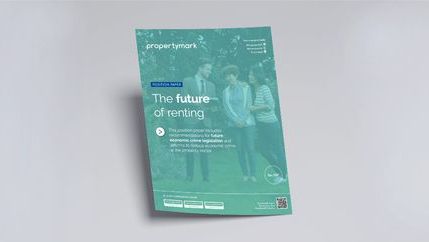
The Future of Renting
The Future of Renting features our recommendations to the UK Government and its plans to reform the private rented sector in England. We want to help shape and influence the UK Government’s Renters’ Reforms White Paper which is due to be released in 2022.
Professional agents are key to raising standards
One of the most effective ways to improve housing quality is to ensure that those managing property are competent, qualified and accountable. Qualified and regulated agents are far better placed to advise landlords on meeting standards, carry out proactive inspections, and resolve issues before they escalate.
The current lack of minimum standards creates inconsistency in service levels and leaves consumers exposed to poor practices.
We have set out clear recommendations for a new regulatory framework, which includes minimum qualification requirements, a statutory Code of Practice, mandatory Continuing Professional Development, and an independent regulator with enforcement powers.
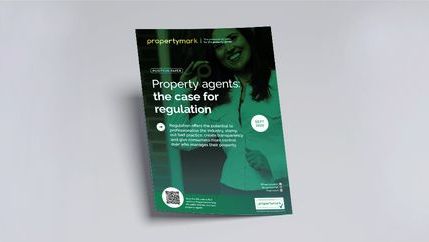
Property agents: the case for regulation
Regulation offers the potential to professionalise the industry, stamp out bad practice, create transparency and give consumers more control over who manages their property. Minimum qualification requirements and statutory Code of Practices to be adhered to by all letting and managing agents in England and sales agents across the UK should be introduced.
Enforcement must target poor practice
Recent years have shown that relying solely on redress schemes and fragmented enforcement is not enough. The number of individuals listed on the Database of Rogue Landlords and Property Agents remains low, demonstrating the limitations of the current system.
We have long argued that improving standards requires a properly resourced enforcement framework with greater data sharing and stronger oversight of both landlords and agents
Raising standards without reducing supply
Any reform to the DHS must also consider the wider pressures on supply. The PRS houses millions of households and plays a crucial role in meeting housing needs.
Improving housing quality and maintaining supply are not mutually exclusive goals, but they require careful policy design. Reform must be balanced with measures that support and incentivise landlords to invest in improvements and avoid creating further uncertainty.
It is also vital to ensure welfare support keeps pace with rents, so welfare-dependent and vulnerable tenants have reliable access to a sustainable PRS.
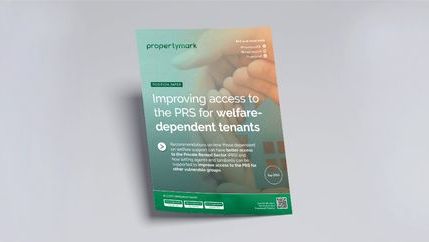
Improving access to the PRS for welfare-dependent tenants
Includes recommendations on how those dependent on welfare support can have better access to the Private Rented Sector (PRS), and how letting agents and landlords can be supported to improve access to the PRS for other vulnerable groups.